
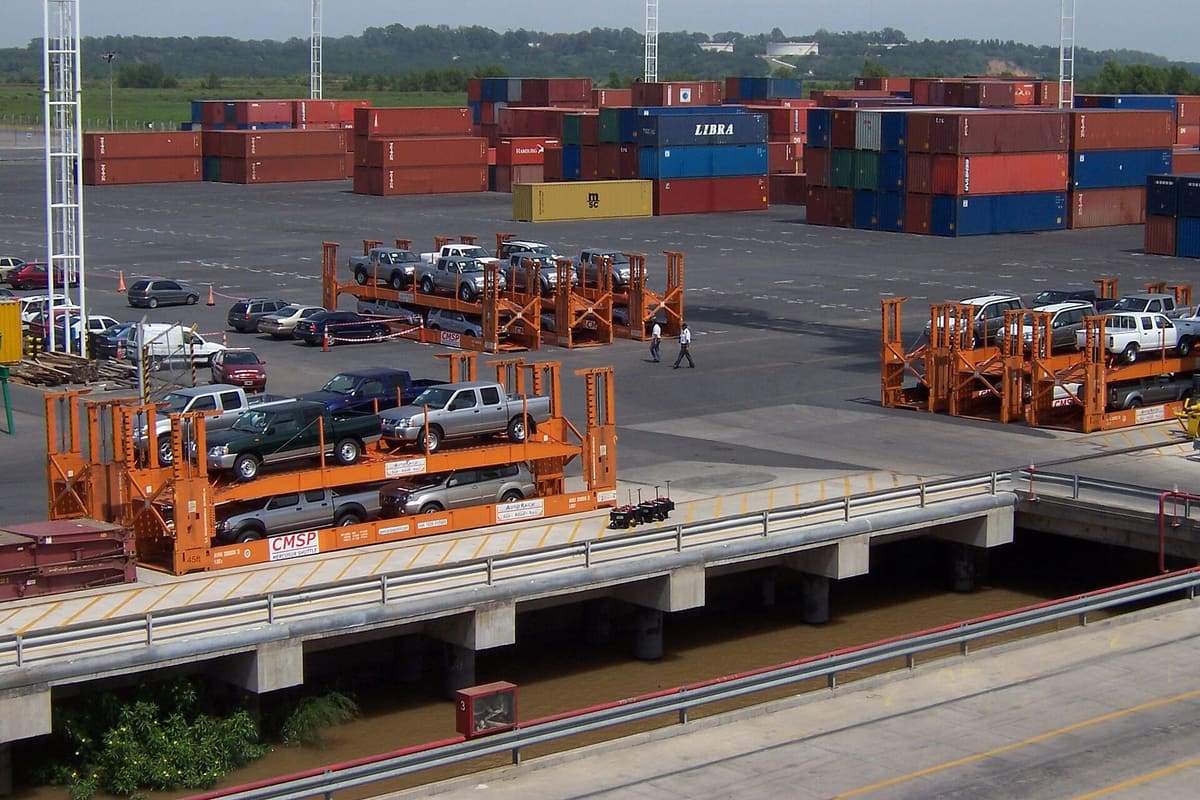
At 3.40am the pilot boat leaves the quay. There is almost no wind, only the low vibration of the engine. Forty minutes later it comes alongside a container ship in from Southeast Asia and the pilot climbs the rope ladder — his fourth boarding of the night.
A port is one of the few places that genuinely never stops. Time here is not divided into day and night but into tides, sailing schedules and shifts.
Morning: the rhythm of forty thousand boxes
After daybreak the rhythm becomes visible. The quay cranes work along the berth in sequence, lifting, swinging and setting down a container roughly every two minutes. This port handles more than 40,000 containers on an average day.
Automated quay cranes now account for 60 per cent of the fleet. In the control room, one operator watches six machines at once; the job has moved from a cab tens of metres up to a seat in front of a bank of screens.
It used to be the people chasing the boxes. Now the boxes follow the system.— A crane driver with twenty-three years on the docks
Late: the last shift under the lights
At eleven the yard lighting comes up across the terminal. Tally clerks ride electric scooters between the stacks, checking container numbers. The wind comes off the water and the temperature is close to ten degrees below the daytime high.
At the end of the thirty-sixth hour the port shows no sign of stopping. The next pilot boat is already waiting to leave.

You do not see many pieces that show the process like this any more.
Clearly written, and the section on the data is more solid than most coverage of this.
Clearly written, and the section on the data is more solid than most coverage of this.
I had not thought about it from this angle. It did shift my view a little.
Hope there is a follow-up. These things tend to drop out of view after a few weeks.